
Loading page
A practical guide to bears, coyotes, foxes, raccoons, and other New Jersey wildlife that may pass through a yard: how to prevent conflict, when to give animals space, and where to report concerns.
New Jersey wildlife can share residential neighborhoods, farms, parks, and roads. Black bears, coyotes, foxes, raccoons, opossums, deer, and other animals may search for food or move through a yard. The safest first steps are usually to keep a respectful distance, bring pets and children indoors, secure food and trash, and give the animal a way to leave. Do not feed or approach wildlife.
Black bears are powerful omnivores and opportunistic foragers. Keep garbage in a secure container or building until collection day, clean grills, remove pet food and bird seed when not in use, and never feed a bear. NJDEP provides current bear-safety guidance and a 24-hour hotline for bear concerns.
Coyotes and foxes are predators that help regulate small-animal populations, but they may also be drawn to unsecured trash, pet food, fallen fruit, or accessible poultry. Do not feed or try to tame them. Secure rabbits and poultry, bring pets in at night, supervise small pets outside, and pick up fallen fruit. If a coyote approaches people without fear or attacks, NJDEP advises contacting local police and Fish and Wildlife.
Raccoons are adaptable foragers that may raid unsecured garbage, compost, pet food, or sheds. Close access to food and shelter without trapping an animal inside. Avoid direct contact: wildlife can bite or scratch, and sick-looking behavior needs professional assessment. Do not try to catch, poison, or relocate an animal yourself.
If an animal appears injured, sick, orphaned, or trapped, keep people and pets away and contact a licensed wildlife rehabilitator or animal control before intervening. A young animal may not be abandoned; a parent may be nearby. Use NJDEP’s current reporting instructions for unusual or rare wildlife sightings and wildlife road observations, and make reports only from a safe place. For an immediate threat to human safety, contact local emergency services.
For a quick yard check, look for unsecured garbage, pet food, bird seed, fallen fruit, dirty grills, open sheds, and gaps under porches. Remove food attractants, secure containers, and close entry points only after confirming no animal is inside. Keep pets supervised and wildlife at a distance. Do not feed, poison, trap, or relocate an animal yourself.
For injured or young wildlife, pause before intervening: a parent may be nearby and a well-meant rescue can separate an animal from its family. Keep people and pets back, note the location, and call a licensed rehabilitator or animal control before handling. For species-specific concerns, follow NJDEP’s current guidance and use its listed reporting channels.
Short evidence blocks and visual explainers are included with the guide so you can check an idea, follow a source, or take it into a classroom or meeting.
These public-domain U.S. Fish & Wildlife Service photos illustrate common species and coexistence questions; they are not photographs of specific New Jersey encounters.
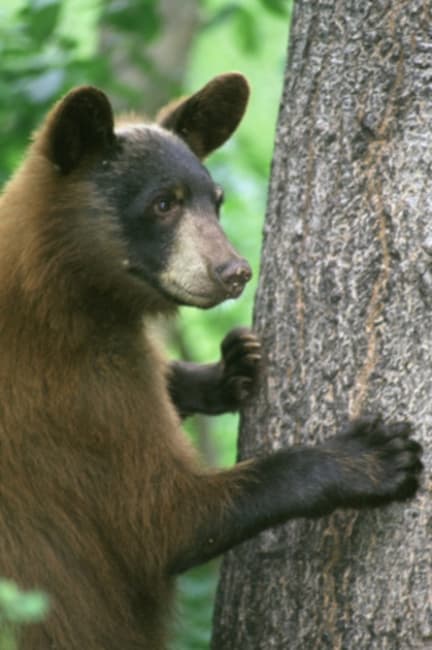
Black bears may investigate food sources; secure trash, pet food, bird seed, and grills, and never feed a bear.
Photo: U.S. Fish & Wildlife Service (public domain).
View original source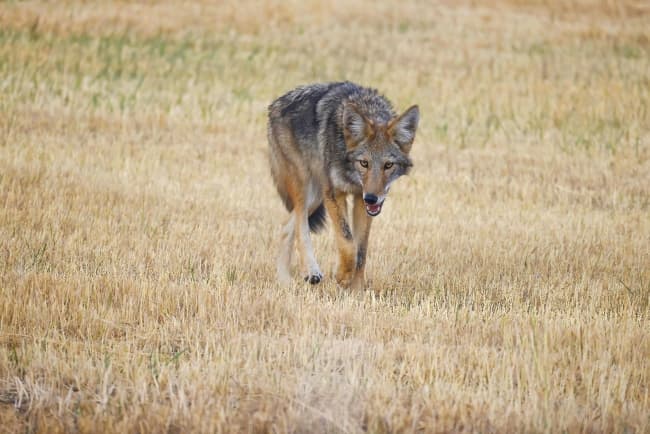
Coyotes are predators found statewide in New Jersey; supervise small pets and secure food and poultry.
Photo: Lane Wintermute / U.S. Fish & Wildlife Service (public domain).
View original source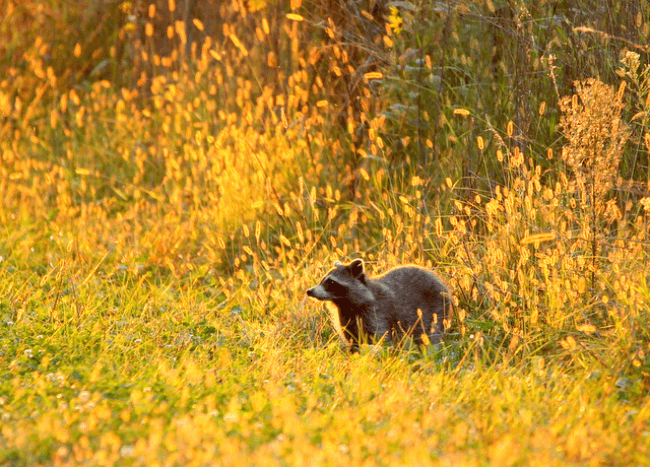
Raccoons are adaptable foragers; close off trash and food access without trapping an animal inside.
Photo: U.S. Fish & Wildlife Service (public domain).
View original sourceGive wildlife room to leave, remove what is attracting it, and contact a qualified professional when an animal may be injured or poses a safety concern.
Bring people and pets indoors. Do not approach, feed, corner, touch, or try to photograph an animal at close range.
Secure garbage, pet food, bird seed, dirty grills, fallen fruit, and poultry or rabbit enclosures.
For injured, sick, young, or trapped wildlife, contact a licensed rehabilitator or animal control before handling.
Use the right channel, share the location from a safe place, and follow current agency instructions.
NJDEP Fish and Wildlife’s bear hotline is available 24 hours: 1-877-927-6337. Do not approach a bear or feed it.
Open the official pageLeave young animals undisturbed unless an expert advises otherwise. Contact a licensed rehabilitator or animal control before touching or transporting wildlife.
Open the official pageCheck the NJDEP directory and call first; species capacity and availability vary.
Open the official pageUse NJDEP’s reporting instructions and NJ Wildlife Tracker where applicable; never enter or stop in a traffic lane to make a report.
Open the official pageNJDEP advises contacting local police and Fish and Wildlife if a coyote shows no fear of people during the day or attacks. Fish and Wildlife: 908-735-8793; after-hours NJDEP hotline: 1-877-WARN-DEP.
Open the official pageKeep your distance, bring people and pets indoors, do not approach or feed the bear, and secure food attractants. Follow NJDEP’s current bear-safety instructions; call its 24-hour hotline at 1-877-927-6337 for bear concerns.
NJDEP advises keeping garbage in a secure container or building until collection day and removing other food attractants such as pet food, bird seed, and dirty grills.
NJDEP reports coyotes in all 21 New Jersey counties. Coyotes generally avoid people, and securing food, trash, poultry, and pets helps prevent conflict.
NJDEP advises contacting local police and Fish and Wildlife if a coyote shows no fear of people during the day or attacks. Do not approach or try to capture it.
Bring pets indoors at night, supervise them outside, secure rabbits and poultry, and remove pet food and fallen fruit. Follow local leash rules and do not feed wild canids.
Observe from a distance and keep people and pets away. A parent may be nearby, and NJDEP recommends contacting a licensed wildlife rehabilitator or animal control before handling or moving young wildlife.
Do not take a healthy wild animal home, trap or relocate wildlife yourself, or release a captive animal outdoors. Contact NJDEP, animal control, or a licensed rehabilitator for lawful next steps.
Use NJDEP’s licensed wildlife rehabilitator information page and contact a rehabilitator before bringing an animal; availability and species capacity vary.
NJDEP’s wildlife reporting page links to the NJ Wildlife Tracker for appropriate rare-species and roadway observations. Record details only from a safe location and never enter traffic to photograph wildlife.
No. NJDEP advises against feeding wildlife; feeding bears is illegal in New Jersey. Remove attractants and observe wildlife from a distance instead.