
Loading page
Native plants, rain gardens, rain barrels, compost, quieter equipment, and invasive-species awareness for yards and shared green spaces.
A rain garden is a shallow, planted basin that temporarily holds runoff from a roof, walkway, or small paved area. It is a small piece of green infrastructure, not a pond and not a way to send water to a neighbor. The right site has a safe overflow route, enough separation from buildings, and soil that can drain between storms.
Sketch the roof or paved area, downspouts, slope, utilities, septic or well areas, play paths, property lines, and the place water already travels. Mark a basin, an inlet, a planted overflow, and a dry route around it. Call before you dig and check current municipal, utility, and NJ Pinelands guidance for your property. If water sits for days, flows toward a foundation, or the site has contamination or a high water table, pause and ask a qualified local professional.
Use soil amendments and mulch only when the site guidance calls for them. A stone-lined inlet slows erosion, native plants hold soil and provide habitat, and a visible overflow keeps an unusually large storm from cutting a channel. Source plants from a New Jersey native-plant nursery, county soil-conservation district, or extension program that can name the species and growing conditions. Avoid buying a plant only because a label says “pollinator friendly”; check current NJDEP and NJDA invasive-species guidance first.
Place moisture-loving plants in the basin, plants that tolerate alternating wet and dry conditions on the edge, and drier species on the upper berm. Keep the inlet and overflow clear, water new plants while they establish, replace weeds with mulch, and inspect after heavy rain. A rain garden works because the whole sequence works together: catch, soak, overflow, and care.
Leave room for shade, leaf litter, shrubs, and a small untidy corner for insects and birds. Fix leaks, use a rain barrel only with a secure lid and safe overflow, and compost according to the receiving program's rules. The goal is a yard that holds water, supports life, and remains easy for people to move through.
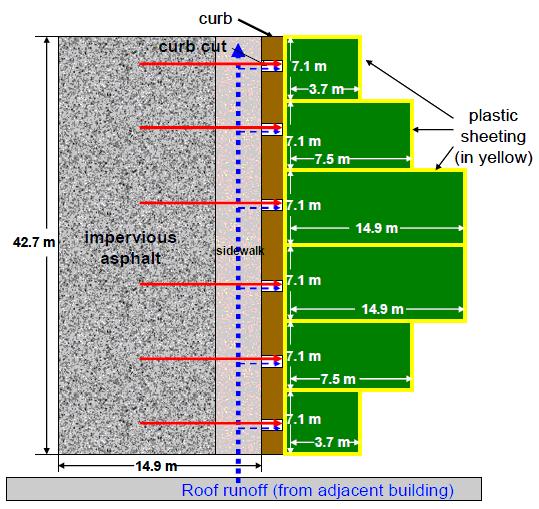
This EPA site plan shows six rain-garden cells receiving runoff from a parking lot, sidewalk and roof. Green rectangles mark the gardens; red arrows show surface runoff; blue lines show pipes.
This is a monitored research installation, not a ready-to-build residential blueprint. Use local guidance to design for your own soil, drainage and property.
Design image: U.S. EPA. Read the Edison project description. Open the complete plan.
Short evidence blocks and visual explainers are included with the guide so you can check an idea, follow a source, or take it into a classroom or meeting.
Read the flow first, then place soil, plants, and overflow so rain slows down instead of rushing to the street or a neighbor's foundation.
Trace roof, driveway, slope, utilities, and the route people need to keep dry.
Direct a downspout or path into a shallow basin with a stable, erosion-resistant inlet.
Use site-matched soil and native plants to hold water while it infiltrates between storms.
Give large storms a visible, planted or stone-lined route away from buildings and property lines.
Mulch, weed, water new plants, and inspect the inlet and overflow after heavy rain.
Use this as a sketching prompt, then check local guidance before digging or changing drainage.
Mark utilities, slope, buildings, wells or septic areas, paths, and property lines. Check local guidance and call for utility marking.
Use site-approved soil amendments, erosion-control stone, mulch, and healthy plants matched to wet, edge, and dry zones.
Ask a New Jersey native-plant nursery, county soil-conservation district, or extension program for species and growing-condition advice.
Keep the inlet, basin, and overflow visible and clear. Inspect after storms and never redirect water toward a foundation or neighbor.
Open the official pageCompare rain gardens, bioswales, tree trenches, and permeable surfaces before choosing what fits your site.
Open the official pageTick items as you go. Progress is saved in this browser only.
0 of 5 done